

What Is Concrete Made Of? A Guide from Lehi Concrete
Concrete is the foundation of our modern world. It’s the material that forms our driveways, patios, office building floors, and the very foundations of our homes. As the most consumed man-made substance on Earth, its strength and reliability are often taken for granted. But have you ever wondered what actually goes into the gray mixture that provides so much structure to our lives? Many people use the terms "cement" and "concrete" interchangeably, but this is a common misconception. In reality, cement is just one of the key ingredients in the recipe for concrete. To put it simply, cement is to concrete what flour is to cake—an essential component, but not the final product.
At Lehi Concrete, we believe that an educated customer is an empowered one. Understanding the core materials that make up concrete helps you appreciate the importance of professional installation and make informed decisions for your property. This guide will break down the science behind the slab, exploring the essential ingredients and explaining how we turn them into a durable, long-lasting surface.
The Recipe for Rock: Concrete’s Core Components
Creating high-quality concrete is a precise science. It involves a carefully balanced recipe of three main components: a binder (cement), fillers (aggregates), and an activator (water). Getting this recipe right is crucial for ensuring the final product is strong, durable, and built to last for decades.
Ingredient #1: The Binder – Portland Cement
Portland cement is the fine, gray powder that acts as the glue, holding all the other materials together. It is not a brand name, but rather the generic term for the type of cement used in nearly all modern concrete. Cement is a manufactured product created through an energy-intensive process. It starts with raw materials rich in calcium, silica, alumina, and iron, typically sourced from limestone, clay, shells, and sand.
These materials are crushed and fed into a massive, rotating kiln where they are heated to about 2,700°F. This intense heat causes a chemical transformation, forming marble-sized chunks known as "clinker." The clinker is then cooled and ground into the fine powder we recognize as cement. The real magic happens when water is added. Cement undergoes a chemical reaction called hydration. It doesn't simply "dry" like mud; it cures by forming crystals that interlock with each other and with the aggregates, creating a dense, stone-like matrix. This process is what gives concrete its remarkable strength.
Ingredient #2: The Muscle – Aggregates
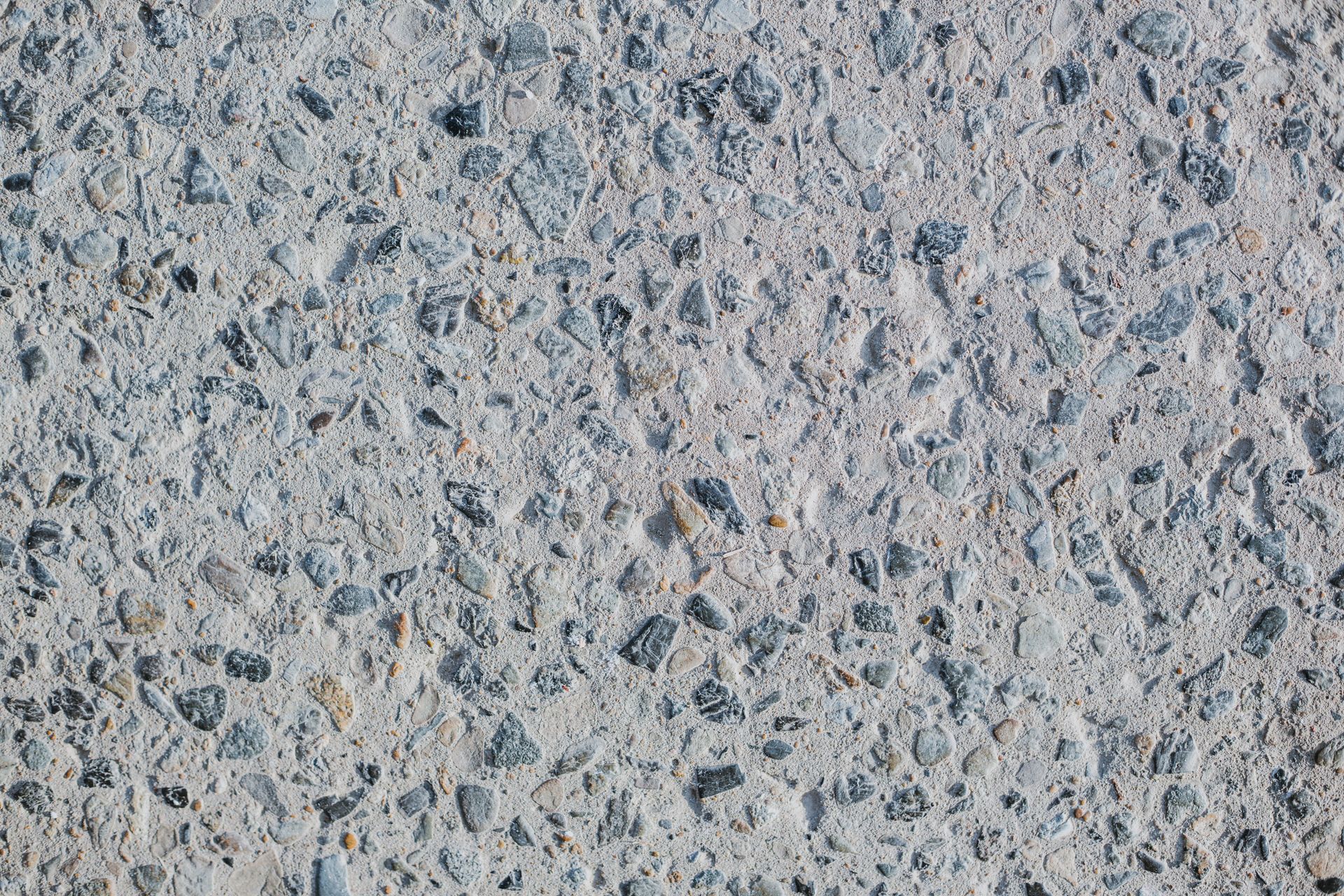
If cement is the glue, then aggregates are the muscle. They are the fillers that provide the bulk, strength, and structural integrity of the concrete, making up about 60% to 75% of the total volume. Without aggregates, you would just have a brittle cement paste that would easily crack. Aggregates are divided into two main categories:
- Fine Aggregates (Sand): These small particles fill the tiny voids between the larger stones. This creates a dense and compact mix, reducing permeability and ensuring that every space is filled.
- Coarse Aggregates (Gravel or Crushed Stone): These larger rocks form the structural skeleton of the concrete. They provide the compressive strength that allows the slab to withstand heavy loads, from cars and RVs to the weight of a building.
The quality of the aggregates is critical. At Lehi Concrete, we ensure our aggregates are clean, hard, and properly graded. Contaminants like dirt, clay, or organic material can weaken the bond between the cement paste and the stone, leading to weak spots and potential failure down the road.
Ingredient #3: The Activator – Water
Water is the catalyst that brings the entire mix to life. It initiates the hydration process in the cement, turning the dry powder into a binding paste. However, the amount of water used is a delicate balancing act, known in the industry as the water-to-cement ratio. This ratio is the single most important factor determining the final quality of the concrete.
- Too Much Water: Adding extra water makes the concrete soupy and easier to pour. However, this is a common mistake. The excess water that doesn't react with the cement eventually evaporates, leaving behind microscopic pores. This results in weaker, more porous concrete that is prone to cracking, shrinking, and surface damage from freeze-thaw cycles.
- Too Little Water: A mix that is too dry will be stiff and unworkable. It won't flow properly into forms, creating air pockets (known as "honeycombing") and preventing a strong bond between the materials.
The goal is to use the minimum amount of water necessary to make the concrete workable for finishing. This scientific approach ensures a tight, strong, and highly durable final product.
The Secret Ingredient: Admixtures
Modern concrete often includes a fourth component: chemical admixtures. These are added in small quantities to enhance or modify the properties of the mix, especially in a demanding climate like Utah's.
- Air-Entraining Agents: These are crucial for longevity in Lehi. They create billions of microscopic air bubbles in the concrete. When water seeps into the concrete and freezes, it expands into these tiny pockets instead of putting pressure on the slab, preventing cracking and scaling caused by our freeze-thaw cycles.
- Water Reducers (Plasticizers): These chemicals make the concrete mix more fluid and workable without adding more water, allowing us to maintain a low water-to-cement ratio for superior strength.
- Accelerators & Retarders: Accelerators speed up the curing process in cold weather, while retarders slow it down on hot summer days, giving our crew the time needed to finish the surface perfectly.
How Lehi Concrete Turns Science into a Solid Investment
Understanding the ingredients is one thing; combining them for peak performance requires professional expertise. You cannot simply toss sand, rock, and cement in a wheelbarrow and expect to create a driveway that will last for 30 years. This is where the Lehi Concrete team makes the difference.
Custom Mix Designs for the Lehi Climate
We don’t use a one-size-fits-all approach. For every project, we specify the exact concrete mix design required. A foundation for a building needs a different compressive strength (PSI) than a simple garden path. We ensure the mix has the proper air entrainment and admixtures to handle the specific environmental conditions of the Wasatch Front.
Meticulous Site Preparation
Even the best concrete mix in the world will fail if it’s placed on poorly prepared ground. The base underneath your slab is just as important as the slab itself. We are meticulous about site preparation, ensuring the soil is properly graded for drainage and compacted to create a stable, unmoving foundation. This prevents settling, a primary cause of major cracks.
Expert Finishing and Curing
The skill of the concrete finisher is what distinguishes an amateur job from a professional one. Our experienced team knows the precise moment to float, trowel, and apply a finish to create a dense, durable, and attractive final product. Furthermore, we guide you on proper curing procedures to ensure the concrete reaches its maximum potential strength.
Build Your Project on a Foundation of Knowledge
Concrete is a remarkable and complex material. Its incredible strength and longevity are a direct result of the careful science and craftsmanship that go into every step of its creation, from selecting the right raw materials to making the final pass with the trowel. By understanding what goes into your concrete, you can better appreciate the value of a professional installation. Don’t leave the success of your project to chance. Partner with a team that respects the material and understands the science behind it. Ready to start your project with experts who know concrete inside and out? Contact Lehi Concrete today for a free consultation. We’re here to answer your questions and help you build something that will stand the test of time.
Meta Information
Meta Title: What Is Concrete Made Of? A Guide from Lehi Concrete
Meta Description: Learn the core ingredients of concrete—cement, aggregates, and water—and how they create a durable material. Let Lehi Concrete guide your next project.