

Stop the Swamp: Better Drainage with Lehi Concrete
Water is a homeowner’s most persistent enemy. In the unique climate of Lehi, we often vacillate between bone-dry droughts and sudden, intense storms. When that rain finally falls, it comes down hard and fast. If your property isn't prepared to handle that deluge, the results can be disastrous. We see it all the time: a soggy lawn that turns into a mud pit, driveways that transform into lakes, and worst of all, water pooling silently against the foundation of a home. This isn't just an inconvenience; it is a serious threat to your property's structural integrity. Many homeowners try to tackle drainage with temporary fixes. They dig shallow trenches, install plastic flexible pipes that crush over time, or rely on gravel beds that eventually clog with silt. While these might work for a season, they are rarely permanent solutions.
The real answer to effective water management is likely already a major part of your property: concrete. When designed and installed by professionals, concrete is more than just a surface for walking or parking. It is a powerful, permanent tool for directing water away from your home. At Lehi Concrete, we specialize in turning hardscapes into functional drainage systems. This guide will explore how we use concrete to protect your home, the specific techniques we employ, and why a concrete solution is the best investment you can make for your property’s longevity.
The High Cost of Ignoring Drainage
Before we look at the solutions, it is vital to understand the stakes. Water is patient and persistent. It always follows the path of least resistance. If you don't provide a clear, safe path for it, water will carve its own—often through the most vulnerable parts of your home.
Foundation Failure
This is the nightmare scenario. When water pools around the perimeter of your house, it saturates the soil. As the soil absorbs water, it expands, creating immense hydrostatic pressure against your basement walls or slab foundation. Over time, this pressure causes cracks. Once a crack forms, water infiltrates, leading to mold, rot, and structural instability. In Lehi, where soil conditions can shift, keeping the foundation dry is non-negotiable.
Landscape Erosion
You spend time and money making your yard look beautiful. Uncontrolled runoff from your roof or driveway can undo that hard work in a single afternoon. Fast-moving water strips away topsoil, washes out mulch, and exposes plant roots. It leaves behind ugly gullies and can even undermine retaining walls or fences.
Safety and Pest Hazards
Standing water on walkways is a slip-and-fall lawsuit waiting to happen. In the winter, those puddles freeze into invisible sheets of ice. Furthermore, even a small puddle that stands for a few days becomes a breeding ground for mosquitoes, turning your backyard oasis into a no-go zone.
Why Concrete is the Superior Drainage Solution
When considering how to manage water, you have options ranging from PVC piping to French drains. However, concrete consistently outperforms other materials in three critical areas: durability, maintenance, and precision.
Unmatched Durability
Plastic pipes crush under the weight of soil or vehicles. Gravel drains fill with dirt and lose their ability to drain. Concrete, however, is permanent. It does not rot, rust, or decay. A professionally installed concrete drainage channel can handle heavy vehicle traffic, scorching Utah sun, and freezing winter nights without compromising its function. It is a "one-and-done" solution.
Low Maintenance
A gravel trench requires regular weeding and eventual replacement when it becomes clogged with sediment. A concrete swale or sloped driveway requires almost zero maintenance. There are no filters to clean and no pipes to snake. A simple sweep with a broom or a rinse with a garden hose to remove leaves is all the maintenance a concrete drainage system will ever need.
Precision Control
Water flow is a game of physics. With loose materials like gravel or dirt, it is hard to guarantee exactly where the water will go. With concrete, we can engineer the surface to the millimeter. We dictate exactly where the water flows, how fast it moves, and where it ends up. It gives you absolute control over the elements.
Strategic Sloping: The Invisible Hero
The most effective drainage tool isn't a pipe or a pump; it is gravity. The cornerstone of good concrete work is the "grade" or slope. At Lehi Concrete, we view every slab we pour as a water management device. When we install a new driveway, patio, or sidewalk, we never pour it perfectly flat. We use laser levels and precise calculations to engineer a subtle, almost imperceptible slope—typically a 1% to 2% grade. This means the surface drops roughly one-quarter of an inch for every foot of length. To the naked eye, the surface looks level. But to water, it is a slide.
This gentle angle ensures that rainwater sheets off the surface immediately rather than puddling. We direct this runoff away from your home's foundation and toward safe areas, such as the street storm drains or a designated drainage area in your yard. We often see DIY patios that were poured flat or, worse, sloping toward the house. This directs gallons of water right into the foundation every time it rains. Correcting the grade with professional concrete work is often the most effective way to dry out a damp basement.
Concrete Channels and Swales
For properties with significant water issues—such as runoff from a neighbor's higher elevation yard or a naturally low spot that acts as a bowl—simple grading might not be enough. In these scenarios, we design and install custom concrete drainage channels, also known as swales or flumes. A concrete swale is a wide, shallow trough designed to capture, control, and redirect large volumes of water. Think of it as a permanent, maintenance-free riverbed for your property.
The Benefits of a Concrete Swale
- Capacity: Unlike a narrow pipe that can easily be overwhelmed by a sudden downpour, a swale has a large capacity to move heavy water flow quickly.
- Cleanliness: Dirt and debris wash right through a concrete swale. In a grassy swale, that debris gets stuck, creating dams that back up water.
- Versatility: We can install these along property lines to intercept water before it enters your yard, or run them through the middle of a landscape to drain a low spot. We can even cover them with decorative grates if they cross a walking path.
Permeable Concrete: The Eco-Friendly Option
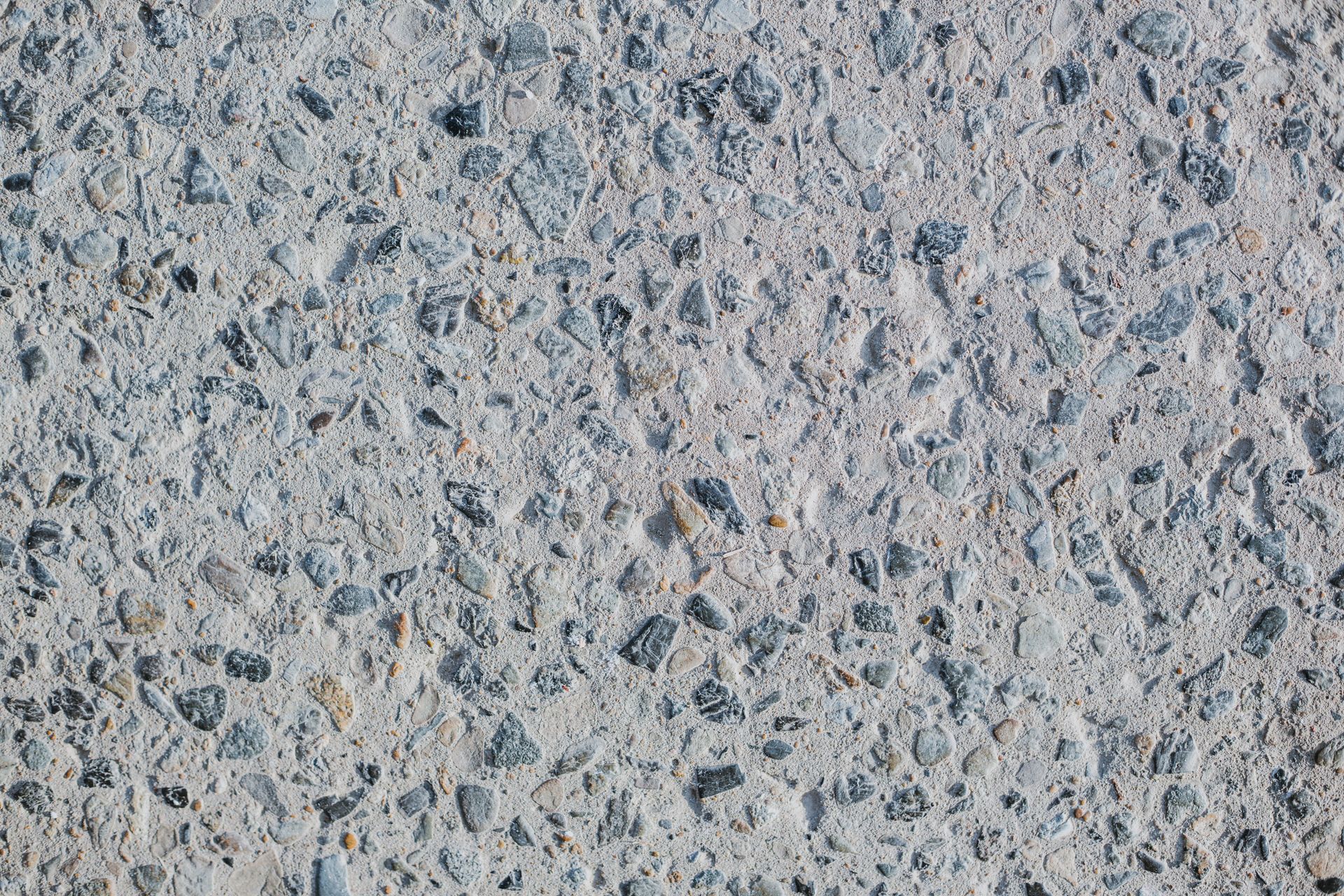
One of the most exciting advancements in our industry is permeable (or pervious) concrete. This material is a game-changer for homeowners who want a hard surface for parking or walking but struggle with strict impervious surface limits or heavy runoff issues. Standard concrete is a solid barrier; water hits it and runs off. Permeable concrete is different. It is engineered with a special mix that lacks fine sands, creating a network of interconnected voids within the slab. It looks like a Rice Krispie treat made of stone.
How It Works
When rain hits permeable concrete, it doesn't run off. It passes directly through the slab. The water filters down into a sub-base layer of clean, open-graded stone underneath the concrete. This stone layer acts as a temporary reservoir, holding the water before allowing it to percolate slowly and naturally back into the soil.
Why Choose Permeable?
- Zero Runoff: It eliminates the need for drainage pipes or swales because the pavement itself is the drain.
- Groundwater Recharge: By returning rainwater to the soil, you help water the roots of nearby trees and replenish the local water table.
- No Puddles: Because water drains through instantly, permeable concrete dries incredibly fast. You won't have to worry about slipping on ice patches in the winter or stepping in puddles after a storm.
How Lehi Concrete Designs Your Solution
Solving a drainage problem requires more than just mixing cement; it requires a deep understanding of hydrology, soil mechanics, and construction. When you hire Lehi Concrete, you aren't just getting laborers; you are partnering with problem-solvers.
The Site Assessment
Our process begins with a thorough walk-through of your property. We don't just look at where you want a patio; we look at the lay of the land. We identify:
- Where water enters your property.
- Low spots where water collects.
- Signs of existing erosion or water damage.
- The soil type (sandy soil drains differently than clay).
Custom Design
Based on our assessment, we design a custom solution. This might involve replacing a sunken driveway that traps water, installing a concrete valley gutter to catch roof runoff, or pouring a new patio with an aggressive slope to protect a basement window well. We ensure that the drainage solution integrates beautifully with your home. A drainage swale doesn't have to look like a utility ditch; with the right finish and placement, it can be an architectural feature.
Professional Installation
Execution is everything. A drainage plan is only as good as the pour. Our team is trained in precise grading techniques. We use high-quality concrete mixes designed to withstand the freeze-thaw cycles of the Utah climate. We reinforce our work with steel to prevent cracking, ensuring that your drainage system remains watertight and functional for decades.
Protect Your Investment Today
Your home is likely the biggest investment you will ever make. Don't let seasonal storms slowly erode its value. Concrete offers a robust, permanent, and effective way to manage water, keeping your foundation dry and your landscape secure. Stop fighting the mud and the floods with temporary fixes. Let the experts at Lehi Concrete design a system that works as hard as you do. Ready to solve your drainage problems for good? Contact Lehi Concrete today for a professional consultation and let us help you build a drier, safer future for your home.
Meta Information
Meta Title: Concrete Drainage Solutions | Lehi Concrete Guide
Meta Description: Protect your home from water damage with concrete drainage solutions. Lehi Concrete explains how swales, slopes, and permeable concrete keep your property dry.